Ear Surgery (Otoplasty) in Iran with Dr. Boromand
Specialized ENT and Facial Surgeon in Tehran with Over 5,000 Successful Procedures

Specialized ENT and Facial Surgeon in Tehran with Over 5,000 Successful Procedures
Specialized ENT and Facial Surgeon in Tehran with Over 5,000 Successful Procedures
Table of Contents
Otoplasty Cost with Dr. Boromand
Who Is a Good Candidate for Otoplasty?
Common Reasons People Seek Ear Surgery
Does Otoplasty Leave Visible Scars?
Combining Otoplasty with Other Facial Procedures
Does Dr. Boromand Perform Ear Surgery Alongside Other Surgeries?
Looking for effective and affordable ear reshaping surgery in Iran? Otoplasty is a cosmetic procedure designed to improve the shape, position, or proportion of the ears commonly performed to correct prominent or protruding ears and create a more balanced appearance.
Dr. Boromand is a board-certified ENT and facial surgeon in Tehran with over 20 years of experience and thousands of successful surgeries. His approach is precise, minimally invasive, and tailored to the natural contours of each patient’s head and ears, ensuring natural, symmetrical, and long-lasting results.
Whether you’re seeking to reduce the prominence of your ears, correct asymmetry, or fix results from a previous surgery, otoplasty can help restore confidence and facial harmony.
Post-Surgery Follow-Ups: Both in-person and remote follow-up appointments are provided to monitor healing and ensure optimal results.
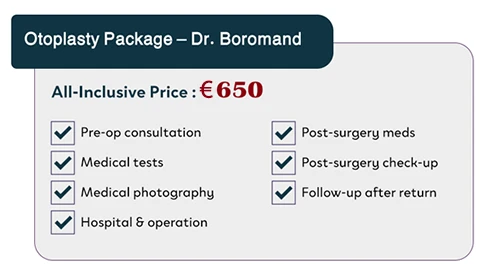
All-Inclusive Price: €650
Includes the Full Surgical Process:
High-quality care from the first consultation to full recovery
Otoplasty is a type of cosmetic ear surgery that reshapes, repositions, or resizes the ears. It’s most often performed to correct prominent ears – ears that stick out more than usual – but it can also help fix other issues like uneven shape, ear deformities from birth, or damage caused by injury.
The procedure doesn’t affect hearing, since it only involves the outer ear (pinna), and is mostly done for aesthetic reasons. The goal is to make the ears appear more balanced with the face, without making them look unnatural or overly flat.
Otoplasty is usually performed on both ears to create symmetry, but it can also be done on just one ear if needed. It’s a relatively quick surgery with minimal downtime and long-lasting results.
This surgery can benefit people of different ages who are unhappy with the appearance of their ears. A good candidate typically has:
For children, otoplasty is usually done around age 5 to 7, when the ears are fully developed and before school-age teasing can begin. Adults can undergo the procedure at any time, especially if they’ve dealt with self-consciousness for years. Both groups can see real emotional and cosmetic improvement.
There are a few common motivations behind getting ear surgery, some physical, others emotional. These include:
For many people, the decision comes after years of hiding their ears behind long hair, hats, or avoiding certain hairstyles altogether. Otoplasty offers a long-term solution and a chance to feel more comfortable in their appearance.
Otoplasty is a small procedure in terms of complexity, but it can bring major changes to how a person sees themselves. Some key benefits include:
For children, it can prevent bullying. For adults, it can close a chapter of self-consciousness that may have lasted for decades. The change is subtle to others, but often life-changing for the person who gets it.
Otoplasty is suitable for both children and adults, but there are some key differences in timing, technique, and motivation.
For children, the surgery is typically performed between the ages of 5 and 7, once the ears have reached near full size. Early correction can prevent teasing and help build confidence during critical developmental years.
Benefits for children include:
For adults, the motivation is often personal and aesthetic. Many adults choose otoplasty after years of dissatisfaction with their ears.
Considerations for adults:
In both cases, otoplasty is a safe and effective procedure with a high satisfaction rate when performed by an experienced surgeon.
Prominent ears are usually the result of natural anatomy rather than any injury or illness. The condition is often genetic and present from birth.
Common anatomical causes include:
These features do not affect hearing but can have a significant impact on appearance and self-esteem. Otoplasty corrects these structures to create a more natural ear contour.
There are different types of otoplasty procedures, each tailored to the patient’s needs and ear anatomy. The goal is always the same: to create balanced, natural-looking ears that better suit the face.
The main types include:
Each type requires a personalized approach based on cartilage structure, skin quality, and the patient’s desired outcome.
Otoplasty can be performed using different surgical techniques, depending on the patient’s anatomy and the type of correction needed. The two most common methods are:
In some cases, a combined approach is used to fine-tune both the ear’s shape and position. The goal is always to maintain the natural look of the ear while achieving better facial balance.
Otoplasty typically leaves minimal to no visible scarring. Most incisions are made behind the ear, in the natural fold where the ear meets the head. This placement hides scars well once healing is complete.
Over time, the scar fades significantly and becomes almost undetectable in most cases. Proper post-operative care, including avoiding sun exposure and following healing instructions, helps ensure the scar remains as discreet as possible.
Otoplasty can be safely and effectively combined with other facial cosmetic surgeries. This is often done to enhance overall facial balance and reduce the need for multiple recovery periods.
Common combination procedures include:
By addressing multiple concerns in one surgery session, patients can achieve a more harmonious appearance and enjoy the convenience of a single recovery timeline. Combining procedures is always personalized based on the patient’s goals and medical suitability.
Yes, Dr. Boromand frequently performs otoplasty in combination with other facial procedures when it’s medically appropriate. Many patients traveling from abroad choose to undergo multiple surgeries during one trip to save time and reduce overall recovery.
Whether it’s combined with rhinoplasty, eyelid surgery, or a facelift, Dr. Boromand carefully plans each procedure to ensure safety, balance, and the best aesthetic outcome. During your consultation, he will advise if combining surgeries is right for you.
Not all ear surgeries go as planned, and in some cases, patients may be left with asymmetry, visible scarring, or under/overcorrection. Revision otoplasty addresses these issues and aims to restore a more natural and satisfying result.
Corrective procedures are often more complex because of:
That’s why revision cases require an experienced surgeon who understands both the technical and aesthetic challenges. A proper waiting period, typically 6 to 12 months after the initial surgery is recommended before revision.
Iran has emerged as a popular destination for ear surgery, including otoplasty, thanks to its advanced medical expertise paired with affordable pricing. When you travel to Iran for otoplasty, Tehran is often the first choice—with its well-equipped clinics, experienced surgeons, and efficient coordination tailored to international patients.
Key advantages include:
Tehran offers a safe, accessible, and medically advanced environment for those traveling abroad for surgery. Patients often leave with noticeable aesthetic improvement and personalized recovery plans even if they only stay for the surgery and recovery period.
The cost of otoplasty is one of the common concerns for individuals considering ear reshaping surgery. This cost depends on several factors, the most important of which are the degree of correction needed, whether one or both ears are being treated, the complexity of the ear structure, and whether it is a primary procedure or a revision.
Therefore, determining an exact figure is only possible after a thorough evaluation by the doctor. However, there are a few simple ways available to get a rough estimate of the cost:
All contact information is available on the Contact Us page or in the website footer.
Is Iran a safe and reliable destination for otoplasty surgery?
Yes. Iran is known for its highly trained surgeons, modern clinics, and strong track record in cosmetic procedures including ear surgery. Many international patients travel here each year for affordable, high-quality care.
Why is otoplasty more affordable in Iran compared to other countries?
Lower operating costs, competitive healthcare pricing, and favorable currency exchange rates make procedures in Iran significantly more affordable without compromising on medical standards.
How long should I stay in Iran for otoplasty?
Most patients stay for 7 to 10 days. This includes the consultation, surgery, initial recovery, and a follow-up appointment before returning home.
Can I combine otoplasty with other procedures during my trip?
Yes. Many patients combine ear surgery with rhinoplasty, eyelid surgery, or facial treatments to maximize results during one recovery period.
Is it possible to have an online consultation before traveling?
Absolutely. You can send ear photos via WhatsApp and receive a personalized evaluation and cost estimate before making travel plans.
Are language barriers a problem when having surgery in Iran?
Not at all. Most clinics that serve international patients have English-speaking staff or interpreters available to assist throughout your stay.
Can I fly alone to Iran for otoplasty, or should I bring someone?
You can travel alone, but it’s recommended to bring a companion — especially for support during the first day or two after surgery.
How soon after surgery can I fly back home?
Most patients are cleared to fly around 5 to 7 days post-surgery, depending on how healing progresses and the surgeon’s recommendation.
What should I consider before choosing Iran for my ear surgery?
Look for an experienced, board-certified surgeon with a strong track record in facial procedures. Also, confirm what’s included in the package and ensure post-op support is available after you return home.
Free Consultation with the Doctor
For more information and to discuss your condition, contact Dr. Boroumand on WhatsApp.

Ask your questions directly to the rhinoplasty surgeon and ENT specialist. You can post your question at the bottom of this page and receive a response shortly.
You can also contact Dr. Boroumand via WhatsApp.


 Thank you doc, I sent messages in whatsappDecember 23, 2025 - 11:31 am by yousef
 I have reviewed your photos. Your nose is a difficult case...December 23, 2025 - 8:13 am by Dr Peyman BoromandHello, if we go ahead with the surgery, I will be coming...December 22, 2025 - 5:27 pm by yousefHi thank you for your message.
I perform open rhinoplasty....December 22, 2025 - 4:46 pm by Dr Peyman Boromand
I have reviewed your photos. Your nose is a difficult case...December 23, 2025 - 8:13 am by Dr Peyman BoromandHello, if we go ahead with the surgery, I will be coming...December 22, 2025 - 5:27 pm by yousefHi thank you for your message.
I perform open rhinoplasty....December 22, 2025 - 4:46 pm by Dr Peyman Boromand
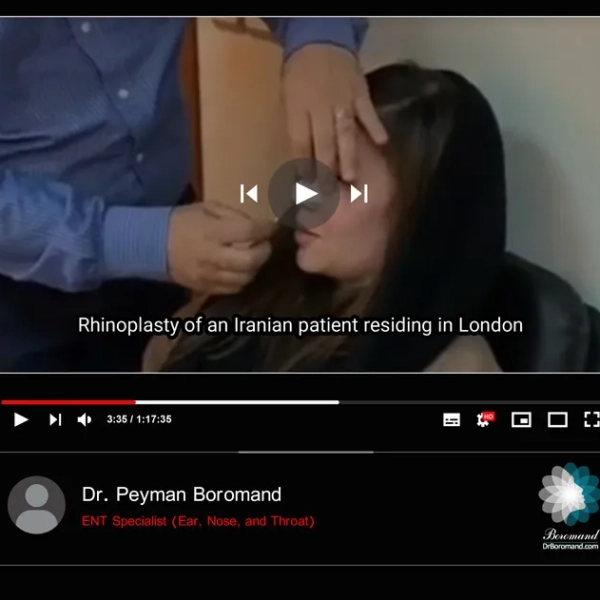
Doctor do you operate ear surgery and rhinoplasty under the same anesthesia? Is it possible?
Hello. Yes, technically it is possible to perform ear surgery and rhinoplasty under the same general anesthesia, especially if both procedures require full anesthesia. However, the duration of the surgery and your overall health are very important, as a longer operation can increase anesthesia risks and affect the recovery period. The final decision should be made after an in-person evaluation by the surgeon and the anesthesiologist.