Revision Rhinoplasty in Iran with Dr. Boromand
Expert Nose Surgeon in Tehran with Over 5,000 Successful Procedures

Expert Nose Surgeon in Tehran with Over 5,000 Successful Procedures
Expert Nose Surgeon in Tehran with Over 5,000 Successful Procedures
Table of Contents
Secondary Nose Surgery with Dr. Boromand
Before & After Rhinoplasty Results by Dr. Boromand
Revision Rhinoplasty Cost with Dr. Boromand
Post-Op Nose job Results by Dr. Boromand
What Issues Can a Revision Rhinoplasty Fix?
When Is the Best Time for Revision Rhinoplasty?
How Is Revision Rhinoplasty Different from Primary Rhinoplasty?
How Long Does It Take to Recover from Revision Rhinoplasty?
Risks and Potential Complications of Revision Rhinoplasty
Use of Implants in Revision Rhinoplasty
Had a previous rhinoplasty that didn’t meet your expectations? Dr. Boromand is a board-certified ENT and nose surgeon in Tehran with over 20 years of experience and a strong track record in complex revision rhinoplasty cases.
He approaches each revision surgery with extra care, aiming to correct structural or aesthetic issues from previous operations while preserving nasal function. Whether you’re dealing with breathing problems, asymmetry, or dissatisfaction with the shape, Dr. Boromand offers personalized solutions to restore both form and function.


All-Inclusive Price: €1850
Includes the Full Surgical Process:
Expert care from start to finish — even after you leave.
Revision rhinoplasty is typically performed when a patient is dissatisfied with the appearance or function of their nose following a previous surgery. This type of procedure aims to correct problems caused by the initial surgery or issues that developed during the healing process.
Some of the most common concerns that can be addressed through revision rhinoplasty include:
A thorough evaluation by an experienced surgeon is essential to determine whether these concerns can be successfully corrected with revision surgery. An in-person consultation is highly recommended before making any final decisions.
The ideal time to undergo revision rhinoplasty is typically 12 months after the initial surgery. This waiting period allows the nasal tissues to fully heal and all swelling to subside, ensuring that the surgeon can accurately assess the final result and identify any issues that truly require correction.
Scheduling revision surgery too early may interfere with the natural healing process, lead to misdiagnosis of the actual concerns, or increase the risk of complications.
However, in certain cases — such as severe breathing difficulties or clearly visible deformities — an experienced surgeon may determine that earlier revision (around 6 months post-op) is safe and appropriate. Such decisions should always be made based on a thorough clinical evaluation.
If you believe your nose may need revision after a previous procedure, feel free to send a message via WhatsApp for a consultation. Dr. Boroumand and his team will assess your individual situation and guide you on the best timing for revision surgery.
Secondary rhinoplasty differs from primary rhinoplasty in several important ways, both technically and in terms of the healing process.
In a primary rhinoplasty, the nasal structures are being altered for the first time. The cartilage, bone, and soft tissues are typically untouched and more flexible, which often makes the procedure more straightforward. In contrast, revision surgery involves operating on a nose that has already undergone surgery. Scar tissue, adhesions, loss of cartilage, or altered anatomy can make the procedure significantly more complex.
Key differences between the two procedures include:
For these reasons, choosing a highly experienced and specialized surgeon in revision rhinoplasty is essential to achieving a safe and satisfying result.
The condition of the nasal skin plays a crucial role in the final outcome of revision rhinoplasty. While most people focus on bone and cartilage, it’s actually the skin that must drape smoothly over the reshaped internal structures to deliver a natural and balanced result. In revision cases, the condition of the skin is even more important than in primary surgeries.
During revision surgery, the surgeon must work with tissues that have already been altered. Previous operations can significantly affect the skin in ways such as:
Skin type also plays an important role:
That’s why, in revision rhinoplasty, the surgeon must adapt specific techniques based on skin quality. These may include cartilage grafting for a more stable framework, reinforcing soft tissue support, and meticulous suturing to optimize skin redraping.
Ultimately, the skin is not just a surface covering, it’s a key element in the success of revision surgery. Careful assessment of the skin before surgery helps guide the treatment plan and contributes to a natural, long-lasting result.
Recovery after revision rhinoplasty depends on several factors, including the extent of corrections made, the condition of the nasal tissues, and the patient’s individual healing response. While the general healing timeline is similar to primary rhinoplasty, it often takes a bit longer.
In most cases:
Being patient and following post-op care instructions carefully is key to achieving optimal results.
While revision rhinoplasty can successfully address many aesthetic and functional concerns, like any surgery, it comes with potential risks. Being informed about these helps patients set realistic expectations and prepare for recovery.
Some common risks include:
Choosing a highly skilled and experienced revision rhinoplasty specialist is the most important factor in minimizing risks and maximizing the chance of a successful outcome.
In some revision rhinoplasty cases, where natural tissues such as nasal cartilage or the septum have been damaged or depleted in previous surgeries, the surgeon may use synthetic implants to help reconstruct the nose. These implants are typically made from biocompatible materials that are well-tolerated by the body, with a very low risk of allergic reactions or rejection.
Implants are generally considered when the patient does not have enough usable cartilage from their own body — for example, when the nasal bridge is overly collapsed or the internal support structure is severely weakened. In such cases, implants can restore both the shape and function of the nose. In patients who have undergone multiple surgeries, where tissue loss is extensive, implants may be the only viable option.
While implants offer clear advantages, their use must be carefully evaluated. Despite their compatibility, there are still potential risks such as infection, shifting of the implant, or — in rare cases — extrusion through the skin, especially in patients with thin skin or poor post-op care.
The decision to use an implant must be personalized, based on the patient’s nasal anatomy, skin quality, surgical history, and the expert judgment of the surgeon. Whenever possible, a skilled surgeon will prefer using the patient’s own tissue, but in selected cases, implants can offer a safe and effective solution for achieving a desirable outcome.
Proper preparation before revision rhinoplasty plays a vital role in improving the success of the surgery, minimizing complications, and speeding up recovery. Unlike primary rhinoplasty, revision procedures are typically more complex and require more thorough planning by both the surgeon and the patient.
Key steps before surgery include:
Post-operative care is critical in determining the success of revision rhinoplasty and in preventing complications. Because these procedures are more sensitive, closely following your surgeon’s instructions is essential.
In the first few days after surgery, get plenty of rest and avoid any strenuous activity. Swelling, bruising, and mild discomfort are expected and can be managed with prescribed medications.
Important post-op care tips include:
It’s important to understand that swelling may last longer than with a primary rhinoplasty. The final shape of the nose will gradually become more refined over time, and it may take up to a year for all swelling to fully resolve. Patience and regular follow-up appointments with your surgeon are essential.
Why should I consider Iran for revision rhinoplasty?
Iran is globally renowned for its advanced rhinoplasty procedures, with highly skilled surgeons, modern clinics, and significantly lower costs compared to Western countries, all without compromising on quality.
How experienced are Iranian surgeons with revision rhinoplasty?
Iranian surgeons perform thousands of rhinoplasty and revision rhinoplasty procedures each year. Many are internationally trained and specialize in complex secondary surgeries.
Is revision rhinoplasty in Iran safe?
Yes, when done in accredited clinics by certified surgeons, the procedure is very safe. Iran’s top hospitals and clinics follow international health and safety standards.
How much does revision rhinoplasty cost in Iran?
Above this post, you’ll find the specific price for revision rhinoplasty with Dr. Boromand, who is one of Iran’s trusted and experienced facial plastic surgeons. Usually it is depending on the complexity of the case and the surgeon’s expertise often much lower than in the US or Europe.
How long should I stay in Iran for the procedure?
Patients are usually advised to stay for 7 to 10 days: pre-op consultation, surgery, initial recovery, and follow-up checks.
Will there be language barriers?
Most top surgeons and medical staff speak English, and translation services (Arabic, English, etc) are readily available to ensure smooth communication.
What should I expect during the recovery process?
Initial swelling and bruising subside within 1–2 weeks, but final results may take several months to appear. You’ll get clear post-op instructions and virtual follow-up options.
How many international patients has Dr. Boromand performed surgery on?
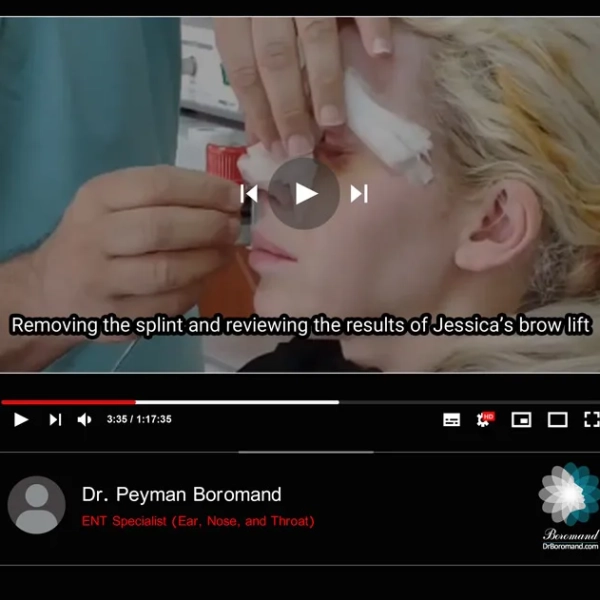
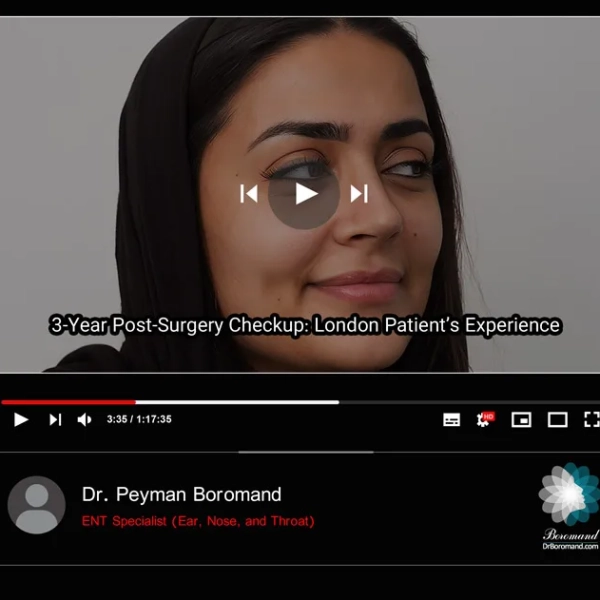
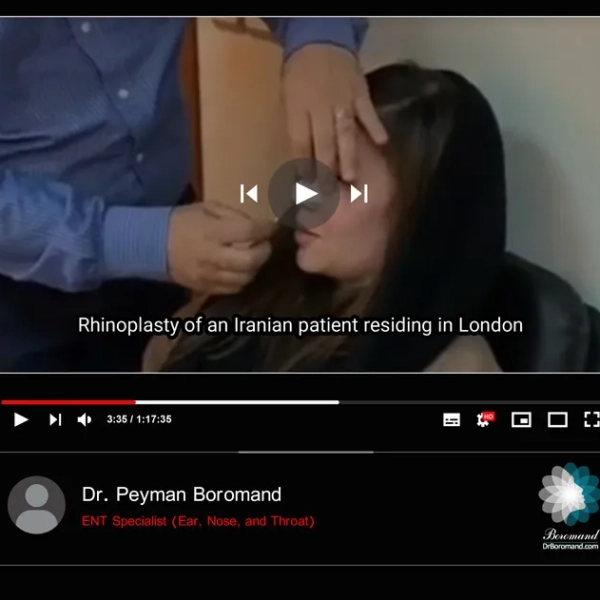
Dr. Boromand has performed revision rhinoplasty on hundreds of international patients from countries such as the United States, France, the UK, Iraq, Australia, Norway, and many more. You can watch before-and-after videos of some of these patients here.
Free Consultation with the Doctor
For more information and to discuss your condition, contact Dr. Boromand on WhatsApp.

Ask your questions directly to the revision rhinoplasty surgeon and ENT specialist doctor peyman boromand. You can post your question at the bottom of this page and receive a response shortly.
You can also contact Dr. Boromand via WhatsApp.


 Thank you doc, I sent messages in whatsappDecember 23, 2025 - 11:31 am by yousef
 I have reviewed your photos. Your nose is a difficult case...December 23, 2025 - 8:13 am by Dr Peyman BoromandHello, if we go ahead with the surgery, I will be coming...December 22, 2025 - 5:27 pm by yousefHi thank you for your message.
I perform open rhinoplasty....December 22, 2025 - 4:46 pm by Dr Peyman Boromand
I have reviewed your photos. Your nose is a difficult case...December 23, 2025 - 8:13 am by Dr Peyman BoromandHello, if we go ahead with the surgery, I will be coming...December 22, 2025 - 5:27 pm by yousefHi thank you for your message.
I perform open rhinoplasty....December 22, 2025 - 4:46 pm by Dr Peyman Boromand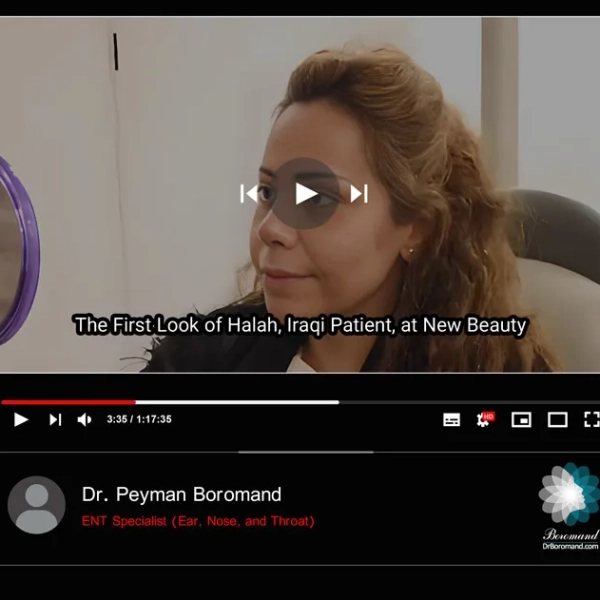


Hello, if we go ahead with the surgery, I will be coming from Iraq, and if possible, I would appreciate if it could be done for less, without compromising quality and care.
And how can we schedule an in person consultation and a possible surgery date?
How about march?
In what hospital would the surgery be done? I sent my photos in Whatsapp for you.
I am thinking of staying in Tehran for 2 weeks actually. Just in case.
I have reviewed your photos. Your nose is a difficult case with thick skin (a fleshy nose), which means the skin is heavier and the underlying cartilage support is relatively weak. Because of this, the surgery will be longer and more complex, and it will require the use of cartilage grafts to properly support, shape, and refine the nose. With correct structural reinforcement and careful technique, a good and natural result can still be achieved.
This will be a revision rhinoplasty, which is generally more complex and time-consuming than a primary surgery, and in many cases cartilage needs to be harvested from areas such as the ear or rib to reconstruct and support the nose properly.
For scheduling your trip and surgery, please continue the coordination on WhatsApp. The exact day and date will be arranged and confirmed with you there.
You will need to stay in Tehran for 7 to 8 days. On the first day, I will see you in the clinic for your examination, and you’ll have your medical photography, blood tests, and imaging done. The surgery will take place early the following morning, and six days later, your nasal splint will be removed.
During your stay, we will also see you for regular follow-up visits to ensure everything is progressing well.
Thank you doc, I sent messages in whatsapp
Good afternoon Dr Buroumand
I previously underwent rhinoplasty, but unfortunately the outcome was not as promised, and my nose has almost returned to its original shape. I would like to know whether you perform revision rhinoplasty for cases like mine, and whether the package also applies to revision surgery.
My questions are as follows:
1. What type of material or cartilage do you usually use for reconstruction or lifting a flat nasal bridge? (Septal cartilage, ear cartilage, rib cartilage, or synthetic implants?)
2. How long would I need to stay in the hospital and in the city after the surgery?
3. If I require follow-up evaluation or minor adjustments after returning home, what kind of postoperative care or support do you provide?
4. Is it possible to see before-and-after photos of other patients with cases similar to mine (flat nose and revision rhinoplasty)?
5. Is the mentioned price an all-inclusive cost, or are there any additional expenses I should be aware of?
Thank you very much for your time and attention.
Kind regards
Hi, Yes, I do perform revision rhinoplasty. However, revision surgery is more complex and technically demanding than primary rhinoplasty. The exact cost of the surgery and all services included in the package are explained in detail on this page of the website.
For achieving the best possible result, depending on your individual condition, I use the patient’s own cartilage from the nasal septum, ear, or rib. Synthetic implants are not used.
Hospitalization is not required. The surgery is performed in the morning, and you will be discharged the same day in the afternoon.
You will need to stay in Tehran for about 6 to 7 days after the surgery. After returning to your home city or country, follow-up care is provided through online consultations, including photo reviews and video calls.
You can view thousands of before-and-after photos, videos, and patient stories on my Instagram account. In addition to Iranian patients, individuals from more than 20 different countries have traveled to undergo surgery with me.
You can also send your photos via WhatsApp so I can review them and provide you with a more accurate and personalized consultation right away.
Hello, I am considering my second nose job. Can I have a consultation to see if it is doable and how much it will cost
Hi Anwaar, the cost depends on your previous surgery and the current shape and condition of your nose.
Could you please send three clear photos via Whatsapp: one from the front, one from the side (profile), and one from below showing the nostrils?
Also, please confirm whether you have had only one previous nose surgery, and let me know if you have any breathing problems.
Thank you for your response.
I don’t have breathing problem, and I had my forst nose job 19 years ago. I am 38 years old now.
I sent photos in whatsapp for you doc.
From what I see, you have a moderate hump, a slightly droopy and bulbous tip, and mild deviation.
A revision is possible and would involve smoothing the bridge and refining the tip. Since it’s your second surgery, we may need cartilage grafts for support.
The revision rhinoplasty cost is written above in this post with all details included clearly. I can confirm it after an in-person consultation.
You can ask any further questions on WhatsApp, and we can also have a video call if you’d like.
Hello my name is Aneela I’m looking at getting revision rhinoplasty done what’s the cost etc?
Hi Aneela, you can send your photos through WhatsApp so that I can personally review them and provide a more accurate assessment.
The cost depends on the complexity of your case and the condition of your nasal structure after the previous surgery. You can find the general package price at the top of this post, it includes the full surgical process: consultation with me before surgery, pre-surgery medical tests, professional medical photography, hospital and operation, medication after surgery, post-surgery check-up, and follow-up after returning home.
Once I review your photos, I’ll be able to give you a more precise quote and discuss suitable dates.
Hi doc I had a rhinoplasty a year ago but unfortunately the result is not what I hoped for. The bridge of my nose was made too flat and straight and now I have a small bump on the side and another on top of the bridge. Also there is some fullness at the tip and slight breathing issues.
I am really anxious about going back to the original surgeon, so I am wondering is it possible for another doctor to correct these small irregularities in-office without revision surgery? Mainly smoothing the bumps and giving a bit of shape back to the bridge sides.
I am 40 and quite nervous about undergoing another surgery unless absolutely necessary. Would love to know if any of this could be handled in a less invasive way by a different doctor. Thank you
Hello there, In some cases, small irregularities on the nose such as minor bumps or asymmetries can be improved non-surgically with precise filler injections (non-surgical rhinoplasty). This can help smooth the bridge and restore contour without surgery.
However, fillers have limitations. If the issues are due to structural changes (like cartilage or bone irregularities, or functional breathing problems), then surgical revision may be the more effective and lasting solution. That said, a consultation and examination would be necessary to evaluate whether non-surgical correction is a safe and realistic option for your case.
Hi doc boromand I have a question. I am thinking to do revision rhinoplasty, it will be my second time. I am a bit worried will my nose be more fragile after the surgery? I see sometimes after nose surgery the bone can get weaker. If yes, for how long it stays fragile? Thank you
Hi, It’s completely natural to be concerned about the structure and strength of your nose after a revision rhinoplasty. While it’s true that the nose can be more delicate during the healing period especially after a second surgery this does not mean it will remain permanently fragile.
During the first few months after surgery, the nasal bones and cartilage are still healing and can be more vulnerable to trauma. However, once the healing process is complete (usually around 12 to 18 months), the structural integrity of the nose generally stabilizes.
In most cases, with proper surgical technique and careful healing, the nose should not be significantly weaker long-term.
If you’re considering revision rhinoplasty, it’s important to discuss your case in detail with your surgeon. We evaluate the current condition of the nasal structure, the previous surgical changes, and the quality of the tissue and cartilage before planning the procedure.
Feel free to reach out if you have more specific concerns or would like a consultation.