
The shape of the nose plays a major role in defining facial balance and beauty. While every nose is unique, recognizing the different types of noses helps patients better understand their own anatomy and the potential outcomes of rhinoplasty. Surgeons also use these classifications to plan personalized cosmetic or reconstructive procedures that enhance both appearance and function.
 In this comprehensive guide, we’ll explore the most common nose shapes, what defines each one, how ethnicity and genetics influence nasal structure, and what surgical or non-surgical treatments can refine or correct them.
Common Types of Nose Shapes
Roman Nose (Aquiline Nose)
The Roman nose (Aquiline Nose), often associated with strength and character, features a prominent bridge that may create a subtle or noticeable curve along the profile. This shape is frequently seen in classical sculptures and portraits of historical figures, symbolizing authority and confidence.
From an anatomical perspective, the nasal dorsum tends to project more than average, while the tip may slightly droop downward. Although some people appreciate its distinguished appearance, others may feel it gives a harsher profile.
Rhinoplasty goals: Gentle reduction of the bridge to smooth the contour, elevating the nasal tip to improve balance, and maintaining a natural, dignified look that preserves facial harmony.
Greek Nose (Straight Nose)
The Greek nose, considered one of the most symmetrical and proportionate shapes, has a straight bridge from the root to the tip without visible curvature or depressions. It’s often regarded as an ideal profile due to its clean lines and refined simplicity.
This type of nose typically fits well with most facial structures and rarely causes functional breathing issues.
Rhinoplasty goals: Usually minimal; patients may request slight tip refinement or nostril reshaping, but the natural straightness is often maintained to preserve elegance.
Nubian Nose (African Nose)
The Nubian or African nose is characterized by a wider base, low nasal bridge, and broader nostrils. These features beautifully reflect ethnic diversity and are influenced by genetics and ancestral adaptation to warm climates, where wider nostrils help with heat exchange.
The skin over the nose tends to be thicker, and cartilage softer, which requires special surgical techniques to maintain definition during cosmetic enhancement.
Rhinoplasty goals: Narrowing the nasal base, refining the tip, or slightly augmenting the bridge for better definition, all while preserving the patient’s ethnic identity and natural proportions.
Snub Nose (Turned-Up Nose)
This type is defined by a short bridge, small overall length, and a slightly upturned tip, giving a youthful and lively appearance. The nostrils are more visible from the front view, which can enhance a “cute” or delicate aesthetic.
However, if overly rotated, the snub nose may appear unnatural or exaggerated.
Rhinoplasty goals: For patients with this nose type, surgery often focuses on achieving ideal rotation and projection, ensuring the upturn appears soft and natural rather than overly accentuated.
Hawk Nose
The hawk (Eagle Nose) nose features a strong, curved bridge and a sharp or downward-pointing tip, resembling the beak of a hawk. It often conveys a bold and defined facial profile, but some people find it too dominant or severe.
From a surgical standpoint, this nose type usually has strong cartilage and bone structure, allowing for precise contouring and durable results.
Rhinoplasty goals: Smoothing the nasal hump, lifting and refining the tip, and achieving a balanced slope that complements the rest of the facial features while retaining character.
Button Nose
The button nose is small, rounded, and slightly upturned, giving a soft and delicate appearance. It is often described as “cute” or “petite,” with minimal projection and a proportionate bridge-to-tip ratio.
This shape is highly sought after in aesthetic rhinoplasty for its balanced, youthful quality. However, its small size means that surgical adjustments must be extremely precise to avoid overcorrection or distortion.
Rhinoplasty goals: Minor refinement, subtle definition of the tip, or improving nostril symmetry, all while maintaining the natural charm and proportion of the button nose.
Fleshy Nose
The fleshy nose is the most common type worldwide. It is usually larger, with a rounded tip, thick skin, and a softer structure. Because of the abundance of subcutaneous tissue, the tip may appear bulbous or less defined.
Although it can give a warm, approachable look, some individuals prefer a more sculpted or refined appearance.
Rhinoplasty goals: Sculpting cartilage to sharpen definition, reducing excess soft tissue where appropriate, and creating a slimmer, more contoured nasal tip, all while keeping the result natural.
Bony Nose
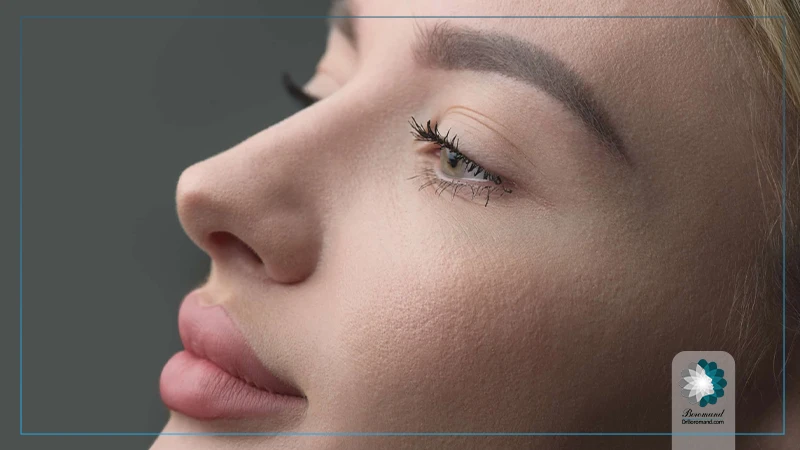 A bony nose is characterized by a strong, prominent nasal bridge made up primarily of hard bone rather than soft cartilage. The structure feels firm to the touch and often creates a sharp, well-defined profile. This type of nose may appear straight or slightly curved, and in some cases, small bony humps can form along the bridge.
From an aesthetic perspective, a bony nose can give the face a bold, elegant, and structured look. However, some people may find the bridge too pronounced or angular.
Rhinoplasty goals: Smoothing minor irregularities or humps along the bone, reducing projection if desired, and softening the overall profile, while preserving the natural strength and definition that make this nose type appealing.
Also read: Fleshy Nose vs Bony Nose
Celestial Nose
Also called the “Hollywood nose,” the celestial nose has a gently concave bridge and a slightly upturned tip that gives a soft, feminine, and elegant appearance. Its delicate proportions often blend beautifully with facial features, making it one of the most desired shapes in cosmetic surgery.
However, not every face harmonizes with this design, over-lifting or excessive concavity can disrupt balance and appear artificial.
Rhinoplasty goals: Maintaining the natural slope and subtle curvature of the bridge, ensuring the upturned tip remains proportional, and achieving a refined but believable aesthetic.
Straight (Columnar) Nose
The straight or columnar nose is defined by a perfectly linear bridge that runs from the root to the tip without any dips, curves, or humps. It creates a balanced and symmetrical profile often associated with classic beauty and facial harmony.
This type of nose reflects strong bone and cartilage support, giving a refined and clean appearance from both the front and side views. Because of its straight contour, it blends naturally with most facial structures and often requires no modification.
Rhinoplasty goals: Usually minimal, minor refinements might include slight tip definition or narrowing of the nasal base, but surgeons typically preserve the straight line of the bridge, as it already represents one of the most harmonious nose types.
Flat or Wide Nose
The flat or wide nose is characterized by a low nasal bridge, broad base, and wider nostrils. This shape is more common in individuals of African or Asian descent and beautifully reflects the diversity of human anatomy.
The flatter bridge may cause the profile to appear less projected from the side, while the width of the nostrils contributes to a softer and more open expression. Although some may seek more definition through cosmetic procedures, many appreciate this shape for its distinctive and balanced look.
Rhinoplasty goals: Subtle bridge augmentation with cartilage grafts or implants, narrowing of the nasal base, and refinement of the nostrils, all performed carefully to preserve ethnic identity and natural harmony.
Bulbous Nose
A bulbous nose is defined by a rounded, enlarged, or bulb-like nasal tip, often caused by thick skin or widely spaced lower cartilage. From the front view, the tip appears broad rather than narrow or pointed. This shape can occur naturally due to genetics or develop over time as soft tissue thickens with age.
Although the bulbous tip gives the face a strong character, some people feel it draws too much attention to the center of the face.
Rhinoplasty goals: Tip refinement through precise cartilage reshaping and soft-tissue thinning. The goal is not to make the nose look sharp or artificial, but to achieve a natural, more defined, and balanced nasal tip that suits the rest of the face.
African Nose Shape

The African nose shape typically features a low nasal bridge, wide nostrils, and softer cartilage structure. The tip may appear broad and less projected, while the nasal base tends to be wider compared to other ethnic groups. These features are the result of genetic and climatic adaptations that have evolved over generations and contribute to the distinct beauty of African facial profiles.
From an aesthetic perspective, this nose shape is a symbol of identity and heritage. In cosmetic rhinoplasty, the goal is never to erase these traits but to refine and enhance the natural structure while maintaining ethnic authenticity.
Rhinoplasty goals: Subtle bridge augmentation, gentle narrowing of the nostrils, and improved tip definition using cartilage grafts if needed, all performed with a conservative approach to preserve the patient’s natural appearance and cultural features.
Asian Nose Shape (Including East Asian Nose Shape)
The Asian or East Asian nose often features a low nasal bridge, smaller tip projection, and rounder nostrils. The bridge may appear flatter when viewed in profile. This shape suits softer facial features and is naturally harmonious.
Rhinoplasty goals: Subtle bridge augmentation (using cartilage or implants) and gentle tip definition while preserving the person’s ethnic character.
Middle Eastern Nose Shape (Including Arab Nose Shape)
Middle Eastern and Arab noses tend to have a high, strong bridge, longer nasal length, and sometimes a slightly downward tip. These noses often give the face a striking, elegant profile that carries strength and personality.
Rhinoplasty goals: Smoothing dorsal humps and refining the tip while maintaining the natural sophistication and cultural identity.
European Nose Shape (Including Eastern, German, Italian, French, and Scottish Types)
European noses show wide variation, from the straight, narrow bridges common in Western Europe (e.g., French, German, Italian) to the slightly wider or more prominent bridges seen in Eastern or Scottish populations.
- French noses are often straight and balanced with moderate projection.
- German noses tend to be stronger and more structured.
- Italian noses may show a mild curve or aquiline contour.
- Eastern European and Scottish noses sometimes feature a higher bridge and more defined tip cartilage.
Rhinoplasty goals: Usually focus on proportion and refinement—smoothing humps, narrowing the bridge, or delicate tip contouring without losing natural facial harmony.
Russian Nose Shape
 Russian noses often have a straight or slightly convex bridge, moderate length, and well-defined cartilage. They can appear elegant yet sturdy, reflecting Slavic bone structure.
Rhinoplasty goals: Minor adjustments to tip shape or nasal length, preserving the naturally refined contour.
Native American Nose Shape
Typically characterized by a straight or gently sloping bridge, wide nostrils, and strong bone structure. The nasal projection is moderate, complementing the facial symmetry common in Native American heritage.
Rhinoplasty goals: Maintaining cultural authenticity, sometimes involving slight bridge definition or nostril refinement.
Latino Nose Shape
Latino or Hispanic noses display diverse features due to mixed ancestry (European, Indigenous, and African). They may have moderate bridge height, rounded tips, or wide nostrils, varying significantly across regions.
Rhinoplasty goals: Personalized, focusing on tip refinement or bridge definition while preserving natural ethnicity and balance.
Caucasian Nose Shape
The Caucasian nose typically features a narrower nasal bridge, moderate to high projection, and smaller nostrils. This structure is often symmetrical and fits a wide range of facial shapes.
Rhinoplasty goals: Usually minor refinement, slight hump reduction, tip reshaping, or correction of asymmetry for enhanced proportion.
Are Certain Nose Types Considered “Bad”?
Of course not. Every nose shape has its own unique charm and character. The variety of nose types seen across different people and ethnicities is part of what makes human beauty so diverse and interesting.
Whether a nose is straight, curved, wide, or delicate, none of these features are “flaws” ; they’re simply reflections of genetics, heritage, and individuality. What truly matters is how well your nose harmonizes with your overall facial features, not how closely it matches a single ideal.
Modern aesthetic medicine doesn’t aim to erase these differences, but rather to enhance natural beauty while maintaining what makes each face unique. This diversity is exactly what makes every person and every nose, beautiful in their own way.
Is Having a Certain Nose Shape an Advantage?
 Not at all. When it comes to facial beauty, there’s no such thing as a “better” or “worse” nose shape. Each type, whether straight, curved, wide, or narrow, has its own unique appeal. These natural differences are what make human faces interesting, expressive, and diverse.
Beauty isn’t about uniformity; it’s about harmony. The goal in aesthetic medicine and rhinoplasty is never to make everyone’s nose look the same, but to create balance and proportion that enhance the individual’s natural features.
So, having a particular nose shape doesn’t mean you’re more or less attractive, it simply reflects your genetic background and individuality. This diversity is what makes human beauty so rich, and it’s something to be embraced, not compared.
Do You Have to Change Your Nose Shape Through Surgery?
Of course not. Changing your nose shape is entirely a matter of personal preference, not a necessity. Every person has their own idea of beauty, and each nose shape carries its own charm. What truly matters is feeling confident and comfortable with your natural appearance.
Some individuals are perfectly happy with their natural nose and wouldn’t change a thing and that’s absolutely fine. Others may wish to refine or reshape certain features through cosmetic surgery and that’s also perfectly valid. Aesthetic surgery is a personal choice, not a requirement.
As a rhinoplasty surgeon, I only consider surgery essential when it relates to health and function for example, if breathing is impaired due to a deviated septum or structural problem. Beyond that, any cosmetic change should come from your own desire, not pressure from trends or others’ opinions.
The most important thing is to be happy with the version of yourself that you choose, whether that means embracing your natural nose or enhancing it through surgery.
Ethnic and Genetic Influences on Nose Shape
Genetics, ethnicity, and environment significantly influence nose shape. For example:
- Caucasian noses often have higher bridges and narrower nostrils.
- African noses tend to have wider bases and softer cartilage.
- Asian noses (especially East Asian) may feature a lower bridge and smaller projection.
- Middle Eastern noses frequently have a stronger dorsal profile and longer length.
Ethnic rhinoplasty focuses on refining features while respecting each patient’s natural identity and heritage.
How Nose Shape Affects Breathing and Function
Beyond appearance, the structure of the nose affects airflow and breathing. Deviated septum, collapsed nasal valves, or asymmetrical cartilage can obstruct breathing even in aesthetically pleasing noses.
A functional rhinoplasty can correct these issues while maintaining or improving cosmetic appearance.
Correcting or Enhancing Nose Shape: Treatment Options
1. Surgical Rhinoplasty
Rhinoplasty remains the gold standard for permanent reshaping. It allows surgeons to correct size, projection, and proportion while addressing breathing function.
2. Non-Surgical Rhinoplasty (Liquid Rhinoplasty)
This method uses dermal fillers to correct minor nasal irregularities without surgery. However, it’s not generally recommended, as it carries a risk of skin necrosis due to possible vascular blockage and cannot create major or permanent changes. For more noticeable and lasting results, surgical rhinoplasty is the safer option.
3. Septorhinoplasty
Septorhinoplasty,This combined approach treats both functional (septum deviation) and aesthetic concerns simultaneously, ensuring improved breathing and a more refined appearance.
Choosing the Best Nose Shape for Your Face
The ideal nose shape depends on facial proportions, bone structure, ethnicity, and personal preference. A skilled rhinoplasty surgeon evaluates these elements using facial analysis to design a nose that enhances harmony and natural beauty rather than following a single “perfect” model.


Free Consultation with the Doctor
For more information and to discuss your condition,contact Dr. Boromand on WhatsApp. Free consultation on WhatsApp
Related Articles
What Not to Do After Rhinoplasty
December 2, 2025Types of Noses: Understanding Shapes, Features, and ...
November 9, 2025How Long Does It Take for a ...
October 27, 2025Greek Nose: Meaning, Aesthetic Ideal, and Modern ...
October 4, 2025Why Is Iran the Best Country to ...
September 24, 2025How Long Should You Stay in Iran ...
September 14, 2025