
Rhinoplasty is one of the most popular cosmetic procedures worldwide. Whether for aesthetic enhancement or to correct structural concerns like a deviated septum, rhinoplasty can significantly impact both appearance and function. One of the most important decisions patients and surgeons make during the planning phase is choosing between open and closed rhinoplasty techniques. Understanding the fundamental differences between the two is crucial for making an informed choice.
In this comprehensive guide, we’ll explore the key differences between open and closed rhinoplasty, their advantages and disadvantages, recovery expectations, ideal candidates, and how to determine which technique is best suited to your needs. This resource is designed to help you feel confident and informed before your consultation with a board-certified surgeon.
Dr. Boromand, a highly experienced rhinoplasty surgeon based in Tehran, Iran, explains both techniques in detail throughout this guide. At the end, we’ll also highlight why he prefers the open rhinoplasty method to deliver precise, natural, and long-lasting results, particularly for patients with thick skin or structural concerns.
 What Is Open Rhinoplasty?
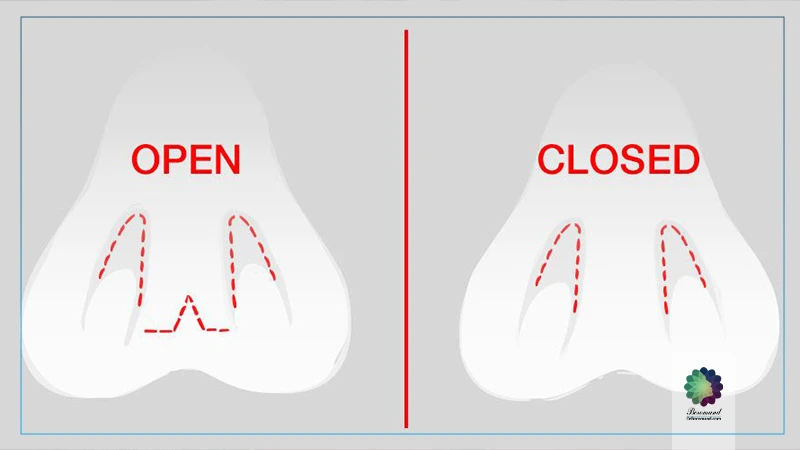
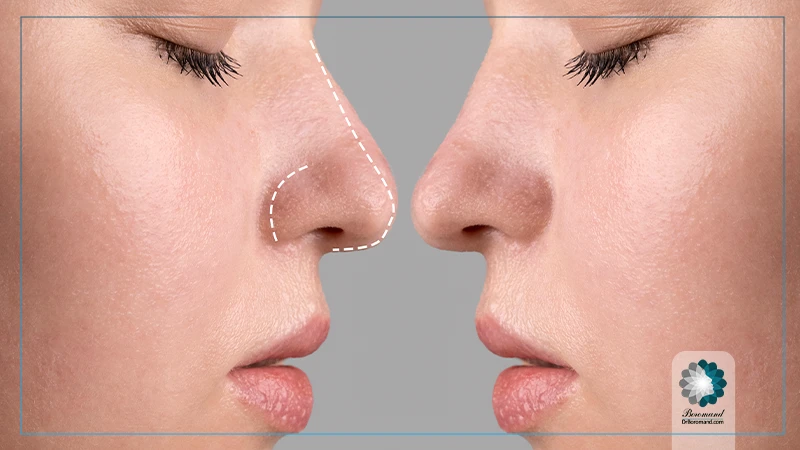
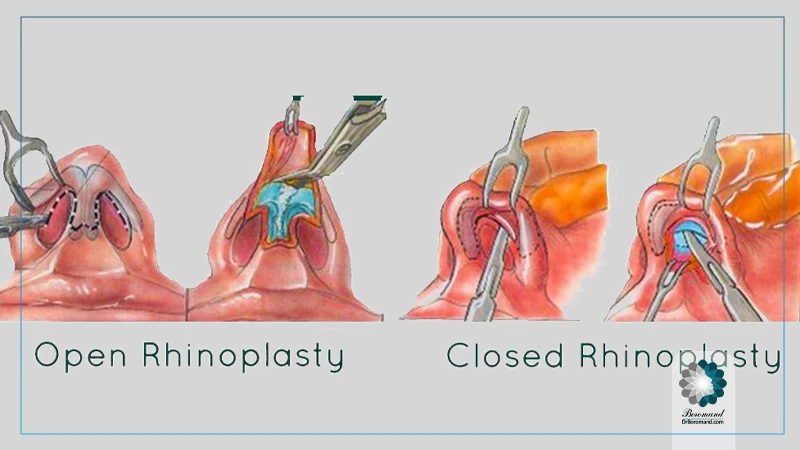
Open rhinoplasty is a surgical technique where the surgeon makes a small external incision across the columella—the strip of tissue that separates the nostrils. This allows the nasal skin to be lifted away from the underlying structures, providing full visibility and access to the bone and cartilage framework.
Advantages of Open Rhinoplasty
- Enhanced visualization: Offers direct view of internal nasal anatomy, allowing precise structural adjustments.
- Greater control: Ideal for complex reconstructions, revision surgeries, or major reshaping.
- Improved symmetry: Beneficial when correcting asymmetries or performing detailed cartilage grafting.
Disadvantages of Open Rhinoplasty
- Visible scar: Though minimal and often fades over time, a small scar remains on the columella.
- Longer recovery: Due to greater dissection, swelling may persist longer compared to closed rhinoplasty.
- Extended operating time: Generally takes longer than the closed approach.
What Is Closed Rhinoplasty?
Closed rhinoplasty, also known as endonasal rhinoplasty, involves internal incisions made within the nostrils. This technique avoids external scarring and is less invasive, making it suitable for patients seeking subtle nasal refinements.
Advantages of Closed Rhinoplasty
- No visible scars: All incisions are made inside the nostrils, eliminating external marks.
- Faster recovery: Reduced swelling and shorter healing time compared to open rhinoplasty.
- Shorter surgery: Typically requires less time in the operating room.
Disadvantages of Closed Rhinoplasty
- Limited access: Surgeons have a more restricted view of nasal structures, which can complicate complex procedures.
- Less control: Not ideal for major reshaping or structural reconstruction.
- Technique-sensitive: Requires a highly skilled surgeon for precise outcomes.
Key Differences Between Open and Closed Rhinoplasty
| Feature | Open Rhinoplasty | Closed Rhinoplasty |
| Incision | External (across columella) | Internal (within nostrils) |
| Scarring | Small visible scar | No external scarring |
| Access | Full access to nasal structure | Limited access |
| Ideal Use | Complex or revision cases | Minor to moderate refinements |
| Recovery Time | Slightly longer | Generally shorter |
| Surgical Time | Longer | Shorter |
Choosing the Right Approach: Factors to Consider
 1. Surgical Goals
- Open rhinoplasty is typically preferred for:
- Structural changes to nasal tip
- Extensive cartilage grafting
- Revision rhinoplasty
- Closed rhinoplasty is often used for:
- Minor shape refinements
- Hump reduction
- Narrowing of the nasal bridge
2. Complexity of the Case
More intricate procedures demand better visibility and access, making open rhinoplasty the logical choice.
3. Surgeon’s Expertise
Some surgeons specialize in one technique over the other. Always choose a board-certified facial plastic surgeon experienced in both methods to get a customized recommendation.
Recovery and Downtime
While both methods share common postoperative care instructions—such as avoiding strenuous activity, sleeping with your head elevated, and using cold compresses—the recovery timelines can vary:
- Open rhinoplasty: Swelling may last several months, with final results visible after 12–18 months.
- Closed rhinoplasty: Most swelling resolves within 2–3 months, with results visible sooner.
Your surgeon will provide a personalized recovery plan based on your procedure type.
Risks and Complications
As with any surgery, both open and closed rhinoplasty carry risks, including:
- Infection
- Bleeding
- Poor wound healing
- Nasal asymmetry
- Breathing difficulties
- Unsatisfactory aesthetic results (may require revision surgery)
A skilled surgeon will minimize these risks through proper technique and postoperative care.
Which Rhinoplasty Technique Is Right for You?
 There is no one-size-fits-all answer. The ideal approach depends on your specific nasal anatomy, cosmetic goals, and medical needs. During your consultation, your surgeon will:
- Evaluate your nose structure
- Discuss your desired outcome
- Recommend the most suitable technique
Dr. Boromand’s Expertise in Open Rhinoplasty
Dr. Boroumand performs rhinoplasty using the open technique to achieve precise, natural, and long-lasting results. This approach allows him full visibility and access to the nasal structures, enabling subtle and controlled modifications—especially important for patients with thick skin or those needing structural reinforcement. By choosing the open method, Dr. Boroumand ensures enhanced accuracy, improved symmetry, and outcomes that align closely with each patient’s aesthetic goals.
Making an Informed Decision
Whether you’re looking to enhance your appearance or improve nasal function, understanding the differences between open and closed rhinoplasty is essential. Open rhinoplasty offers unmatched precision and visibility for complex cases, while closed rhinoplasty provides a quicker recovery and no visible scarring for simpler refinements.
If you’re considering rhinoplasty in Iran, you’re in one of the most renowned destinations for nasal surgery. Iran is known globally for its highly skilled surgeons, advanced techniques, and large number of successful procedures performed annually. Patients from around the world travel to Iran for high-quality results at a more affordable cost.
Consulting a qualified, board-certified facial plastic surgeon—such as Dr. Boroumand in Tehran—is the best way to determine the most appropriate surgical technique for your unique case. With the right approach, rhinoplasty can deliver life-changing results—both aesthetically and functionally.
Free Consultation with the Doctor
For more information and to discuss your condition,contact Dr. Boromand on WhatsApp.
Free consultation on WhatsApp




I am thinking about getting rhinoplasty just to fix a small dorsal hump on my nose. It is not a big issue, but it is been bothering me for a while.
I have read about both open and closed techniques and I am not sure which one would give me a better result for something this minor.
Would closed rhinoplasty be enough for a subtle change like this, or is open still the better option for precision?
For correcting a small dorsal hump on the bridge of the nose, closed rhinoplasty can often be a suitable option—especially if no changes are needed to the nasal tip or overall nasal structure.
Closed rhinoplasty has advantages such as internal incisions (no visible external scars), faster recovery time, and less swelling. For minor corrections, and if the surgeon has sufficient access through the nostrils, this method can be completely appropriate and effective.
However, if very high precision is required, or if there’s a need for reconstruction or modifications to the nasal tip or deeper structures, open rhinoplasty might be the more accurate option, as it gives the surgeon a direct view of the nasal anatomy.