
A “Roman nose” (also called an aquiline nose) is typically defined by a prominent nasal bridge that can make the profile appear strong, straight, or gently curved. While entirely normal and found worldwide, some people feel that a pronounced bridge or high root of the nose (radix) throws off facial balance in photos or in side view. Others love the character it gives their face. This guide explains what a Roman nose is anatomically, how it influences facial harmony, and the full spectrum of modern options—non-surgical and surgical—to refine the profile while preserving your unique identity. (Wikipedia)
If you’re considering subtle refinement or a more noticeable change, you’ll learn how consultation, technique selection, and aftercare work in a rhinology/facial plastic surgery practice. The content below is written for the English blog of Dr. Peyman Boromand (ENT, Rhinology & Facial Plastic Surgery; Head & Neck Surgeon in Iran).
 What Is a Roman (Aquiline) Nose?
Short definition. A Roman nose is generally described as a nose with a prominent dorsal bridge; the bridge may look straight, slightly convex, or “eagle-like,” which is where “aquiline” (from Latin aquilinus) comes from. The term is descriptive only—it does not imply anything about personality or ethnicity. (Wikipedia)
Key anatomical features
- Dorsum (bridge): The visible ridge from the root (between the eyes) to the tip.
- Radix & nasion: The radix is the nasal root; the nasion marks the junction between the forehead and nose. A high radix often contributes to a Roman profile. (PMC, drsteiger.com)
- Tip & columella: Shape and rotation of the tip (and angle with the upper lip) influence whether a pronounced bridge looks “dominant” or harmonized.
Variations you might see
- High radix with an otherwise straight bridge
Small dorsal “hump” (cartilage/bone excess)
Strong bridge with under-rotated tip (tip points slightly down), accentuating profile strength
What Does a Roman Nose Look Like?
From the profile view, it may appear straight or slightly curved with a convex outline. The bridge typically projects more than in other nose types, giving the face a stronger or more pronounced profile. While some Roman noses also have a downward-sloping tip, this feature is not universal. The defining trait is the elevated or curved bridge, which creates a bold contour that stands out in side view photographs and artistic depictions.
Historical and Cultural Perceptions of the Roman Nose
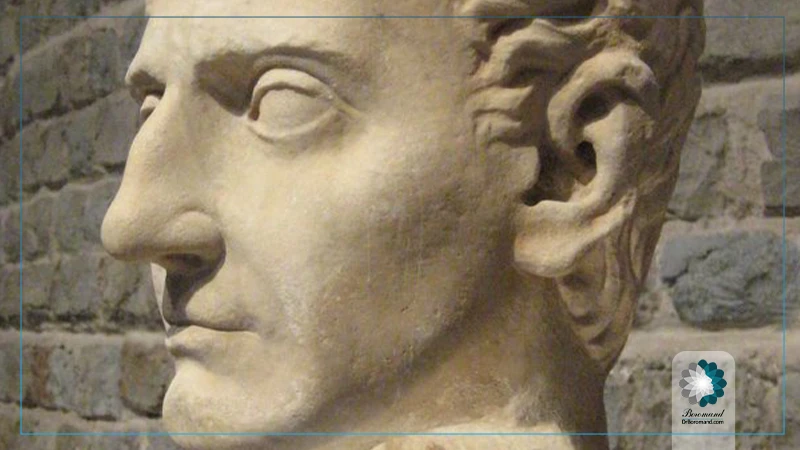 Throughout history, the Roman or aquiline nose has carried symbolic meanings. In ancient Rome and Renaissance art, it was often associated with nobility, leadership, and authority. Statues of emperors, generals, and philosophers frequently feature this nose type to highlight strength of character and intellect. In some cultures, the Roman nose became a marker of aristocracy, while in others it was considered exotic or rare. Even in modern times, certain societies link it with a strong or distinguished personality, though these associations are cultural rather than scientific.
The Difference Between a Roman Nose and Other Nose Types
Compared with other nasal shapes, the Roman nose stands out due to its pronounced dorsum (bridge). For example:
- Straight nose: has a flat and smooth bridge with no visible hump.
- Snub nose: shorter with an upturned tip.
- Button nose: small and rounded, often with a slightly raised tip.
- Greek nose: long and straight from root to tip with no curvature.
The Roman nose differs by featuring a noticeable dorsal height and sometimes a convex outline, which sets it apart as one of the more striking nasal profiles.
Common Misconceptions About the Roman (Aquiline) Nose
Several myths surround the Roman nose. One misconception is that it only appears in people of Italian or Mediterranean ancestry. In reality, this nasal shape can be found across many populations worldwide. Another misconception is that a Roman nose always indicates a “large” nose; in fact, it can be medium-sized or even narrow, depending on other facial proportions. Finally, the belief that this nose type determines personality traits, such as dominance or leadership, is unfounded. These ideas are cultural stereotypes, not biological facts.
How a Roman Nose Affects Facial Aesthetics and Balance
 Facial harmony depends on how features relate to each other rather than on the size of any single element. A Roman nose can lend a sense of distinction and character to the profile, sometimes making the face appear stronger or more defined. On some individuals, a high bridge balances larger eyes or a strong jawline, while on others it may draw attention away from softer features. Perception also varies by cultural beauty standards—what is seen as elegant and noble in one context may be viewed as dominant or sharp in another.
Genetic and Anthropological Background of the Roman Nose
The Roman nose is primarily determined by genetic inheritance. Traits such as nasal bridge height, cartilage structure, and skin thickness are influenced by complex interactions between multiple genes. Anthropologically, variations in nasal shape are often linked to adaptations to climate: narrower, higher-bridged noses may have developed in colder or drier regions as a way to condition inhaled air. While the “Roman nose” is often associated with Europe, similar nasal forms are documented in populations across Asia, the Middle East, and parts of the Americas. This demonstrates that the aquiline shape is part of natural human diversity rather than belonging to a single ethnic group.
Is Having a Roman Nose a Bad Thing?
Absolutely not. A Roman nose is simply one of the many natural shapes found in human diversity. For many, it is considered bold, elegant, and beautiful. Some people admire the strong profile it creates, while others prefer softer nasal lines, but beauty is always subjective.
Everyone has their own taste, and what matters most is how you feel about your own appearance. A Roman nose can be a defining feature that makes your face unique. At the same time, if someone chooses to enhance or change their look, that decision is also entirely personal.
In the end, there is no “good” or “bad” nose type, only individuality. The most important thing is to embrace your own identity and, if you wish, explore the options that help you feel confident and authentic.
Roman Nose & Facial Harmony: When Do People Seek Treatment?
Most patients seek balance rather than “perfection.” Common goals include softening a dorsal hump, lowering a high radix, or elevating/defining the tip so the eyes and lips share attention. During consultation, your surgeon evaluates:
- Front view: width, symmetry, tip definition, and nasal base.
- Profile view: radix height, nasofrontal angle (forehead–nose transition), dorsal line, and tip rotation. Technical planning begins with these landmarks. (PMC, Plastic Surgery Key)
Note on identity: Contemporary rhinoplasty prioritizes natural, individualized results. Technique is adapted to facial proportions, skin thickness, sex characteristics, and cultural preferences, never a one-size-fits-all template.
In Which Countries Is the Roman Nose Most Common?
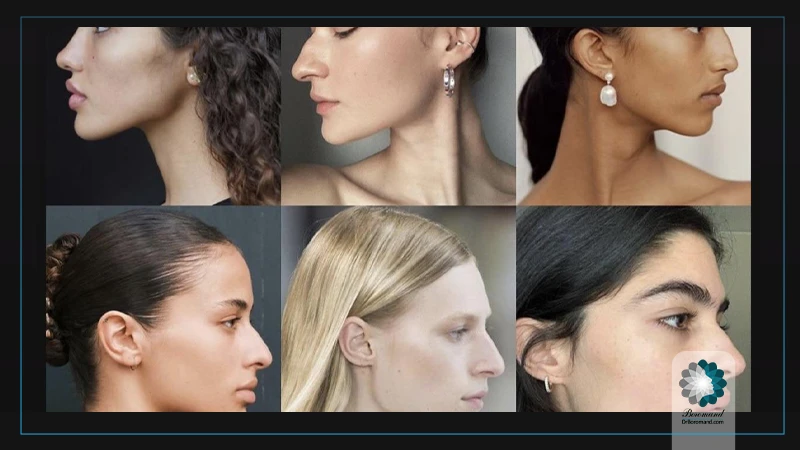 The Roman (aquiline) nose is not limited to a single nation or region. While it is often associated with Southern Europe, especially Italy, Spain, and parts of Greece, it also appears frequently in the Middle East, Central Asia, and South Asia. Anthropological studies show that variations of the aquiline nose can be found in populations from Turkey, Iran, Afghanistan, and the Caucasus region. In addition, certain groups in South America and North Africa also display this feature.
In reality, the Roman nose is part of natural human diversity and can be seen in people of many different backgrounds. Its distribution across continents reflects both genetic variety and historical migration patterns, making it a truly global trait.
Racism and the Roman Nose: Why Stereotyping Is Wrong
Throughout history, some physical traits, including the Roman nose, have been used unfairly to stereotype or label people. These ideas are rooted in prejudice, not science. Associating a nose shape with intelligence, character, or social status is a form of discrimination and has no place in modern society.
Every nose type Roman, straight, snub, button, or otherwise is simply part of human diversity. Reducing someone’s identity to a physical feature fuels racism and bias, both of which harm individuals and communities.
Instead of judging people based on appearance, we should recognize that beauty and worth come from individuality, personality, and respect for one another. No nose shape, or any physical trait, should ever be used as a reason to discriminate.
Non-Surgical Options (Liquid Rhinoplasty)
What it can do: Precisely placed hyaluronic acid (HA) filler can camouflage a mild hump by raising the radix or smoothing the dorsum, creating the impression of a straighter profile without surgery. Results are temporary (commonly 6-12 months, depending on product and metabolism).
Pros
- Immediate result, minimal downtime
- Adjustable and, with HA, reversible using hyaluronidase
Cons & candidacy
- Adds volume; it cannot reduce an actual hump or narrow a wide nose
- Does not fix breathing problems or internal structural issues
- Rare but serious risks include vascular occlusion and, in extremely rare cases, vision loss—hence the need for expert injectors who understand nasal vascular anatomy and have protocols and hyaluronidase available. (PMC, ScienceDirect, thepmfajournal.com)
Surgical Options for a Roman Nose
Nose surgery (rhinoplasty) allows true reduction or repositioning of bone and cartilage and can address function (breathing) at the same time.
1) Reduction (Hump) Rhinoplasty
- Precisely reduces the bony/cartilaginous hump and reshapes the bridge.
- Spreader grafts or preservation maneuvers are often used to protect the internal nasal valve and keep airways stable after hump work.
2) Preservation Rhinoplasty (Push-Down/Let-Down concepts)
- Instead of removing the bridge, surgeons lower the entire dorsum by modifying the septum and bony attachments. This can maintain the natural dorsal lines and reduce the risk of irregularities on thin skin. Not all noses are candidates; selection is key. (AAO-HNS Bulletin)
3) Radix Modification
- Lowering a high radix or carefully augmenting a low radix (with cartilage graft or limited filler) can rebalance the profile without aggressive hump work. (PMC, drsteiger.com)
4) Tip Refinement & Rotation
- Subtle adjustments (cartilage sutures/grafts) can elevate or define the tip, reducing the visual dominance of a strong bridge.
5) Functional Procedures (when needed)
- Septoplasty for deviated septum
- Turbinate reduction or valve support to improve airflow, often combined with cosmetic steps in the same operation.
Rhino Open vs. Closed approach: Both are used. Choice depends on anatomy and goals; the priority is precision and stability rather than a universal “best” method.
FAQ
Is a Roman nose rare?
The Roman nose is not extremely rare; it occurs naturally in many populations around the world.
Does a Roman nose change with age?
Yes, nasal shape can subtly change with age due to cartilage weakening, skin changes, and gravity.
Can makeup make a Roman nose look different?
Makeup techniques like contouring and highlighting can soften or accentuate the bridge visually.
Is the Roman nose more common in men or women?
Both men and women can have it, but it is often perceived as more common in men due to its strong profile.
Are Roman noses linked to intelligence or personality?
No scientific evidence supports this; those ideas are cultural myths.
Can a Roman nose affect breathing?
Not by itself. Breathing issues are usually related to internal structures like the septum, not the bridge shape.
Do Roman noses appear in certain ethnic groups only?
No, this nose shape is found across many ethnicities worldwide.
How is a Roman nose different from a hooked nose?
A Roman nose usually has a high, straight or slightly convex bridge, while a hooked nose curves more sharply downward at the tip.
Can hairstyle or glasses change how a Roman nose looks?
Yes, certain hairstyles or frame shapes can balance facial proportions and draw attention away from or toward the nose.
Why is it called a Roman nose?
The name comes from classical Roman statues and portraits where leaders and nobles were often depicted with this nasal shape.
Free Consultation with the Doctor
For more information and to discuss your condition,contact Dr. Boromand on WhatsApp.
Free consultation on WhatsApp




hello roman nose shape is acceptable in europe society or it is not?
hello, The Roman nose is a facial feature that is generally considered acceptable and sometimes even aesthetically appealing in many cultures. In Europe, this type of nose is usually not viewed negatively, and depending on personal taste and local culture, it can be seen as completely natural and acceptable. In fact, there is a wide variety of nose shapes in Europe, and the Roman nose is recognized as one of the natural and common forms.
What are differences between Roman noses and Greek noses? Are they same
Hello,
Roman noses and Greek noses are not the same; they have distinct shapes and aesthetic characteristics:
Roman Nose: Also called an aquiline nose, it typically has a prominent bridge with a slight curve or bump, giving it a somewhat hooked appearance. The tip may point slightly downward. This nose is often associated with strength and character in classical art and sculpture.
Greek Nose: Known for its straight profile, the Greek nose has a smooth, linear bridge from the forehead to the tip, with no bumps or curves. The tip is usually well-defined and projects naturally without drooping. This nose is often seen as symmetrical and balanced.
In short, the Roman nose has a convex bridge, while the Greek nose has a straight bridge. Their difference is mainly in the profile and the curvature of the bridge.